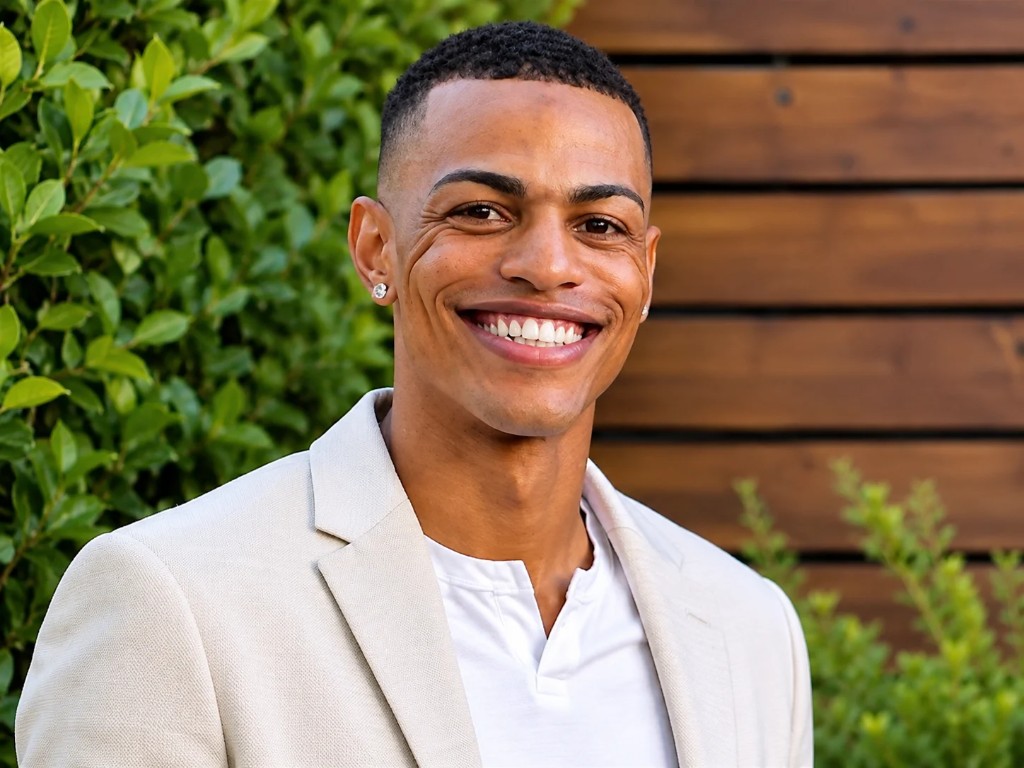
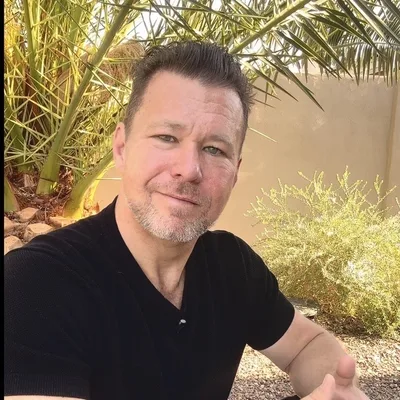
Doug: This is Our Local Life. Good people doing what they’re best at. I’m Doug Palmer, and I sit down with people here in the Valley who are building something worth knowing about. Today I’m sitting down with Tymbrea Mattox. He lives in Arcadia, and in 2021 he built a game called From My Perspective. How are you doing today, Tymbrea?
Tymbrea: I’m blessed, man. Thank you for doing what you do and for having me here.
Doug: If you were introducing yourself to someone who doesn’t know you or the game, how would you do it?
Tymbrea: I’m a father. I’m a man of God. Through certain experiences in my life, I developed a game called From My Perspective to let people have open-minded conversations. Too many times I wasn’t able to express myself, or I did and it was taken the wrong way, or I felt judged. I didn’t have a safe space to do that, so I created one.
Doug: How does the game help you avoid being misunderstood?
Tymbrea: It’s in the title. From the start it lets people know this is the way I see something. It’s not about being better or worse, or judging you or myself. It gives me a safe space and an open floor to say what’s on my mind and my heart, get it off my chest, and move forward.
Doug: After somebody plays it once, how does the experience change them?
Tymbrea: I’ve played it with random people on the street, and they’ve all come back and said they loved it. It’s easy. There’s no defensiveness and no right or wrong answer. It lets people learn about friends they’ve known for years in about a minute.
Doug: Who do you picture it working for?
Tymbrea: Anyone who has breath and a perspective. We all have one. Anybody who has feelings can benefit from it.
Doug: You also run How High TV Services, a TV mounting company. How do the two businesses connect?
Tymbrea: Quality over quantity. When I put a TV up for somebody for the first time, I see their whole family come in after I’m done. The smiles, the hugs, the wows. That fires me up. I was blessed to hone those skills through trials and tribulations. With From My Perspective it’s the same thing. It’s a tool, I help people learn to use it, and then they tell me what it did for them. With the TV it’s, I have more space in my living room, I don’t have to look so low at my TV now. That’s a shift of perspective. With the game, you get a prompt or a word and you’re having a new experience you didn’t know you needed.
Doug: Tell me what we’re looking at here.
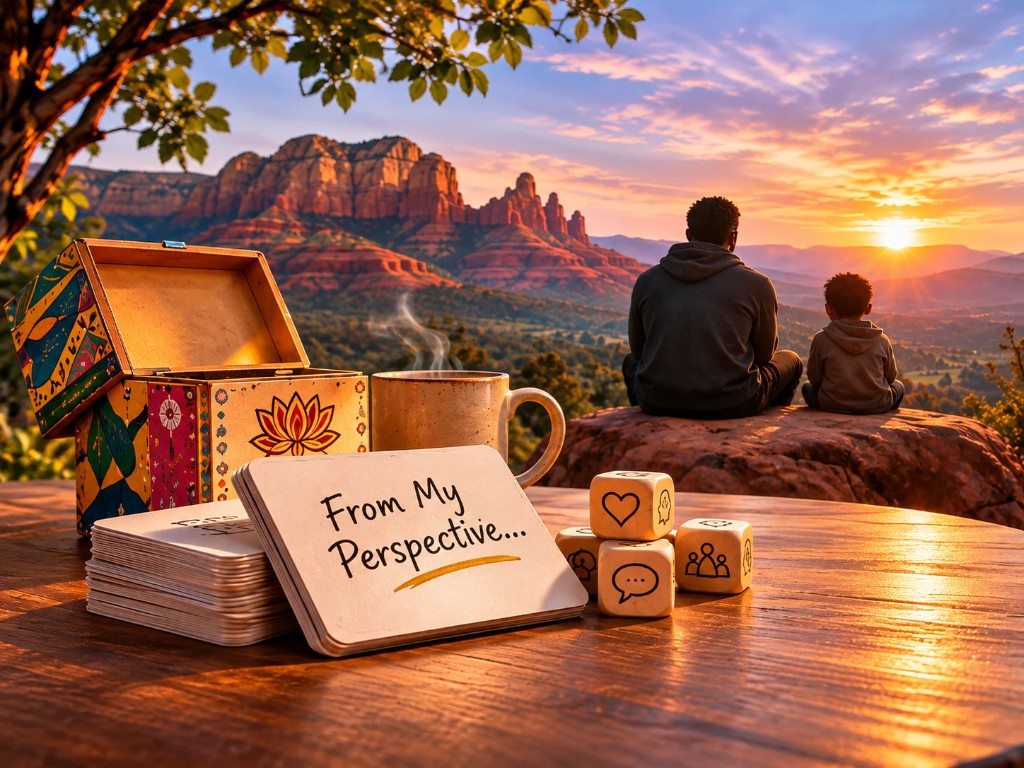
Tymbrea: These are the From My Perspective boxes. People can use them however they want: storage, or design their own. I put the smiley face on because it makes me happy and lifts my energy. Inside you have cubes and cards with prompts or words. The words come in Spanish and English right now, since those are the two most common languages in the US. The prompts are questions you answer starting with the phrase “from my perspective,” so people know from the start this is the way you see it. It eliminates the defensiveness and the arguments and gives you the floor.
Doug: And they come apart?
Tymbrea: All six sides are magnetic, so you can open them from any side. To play, you read the prompt, say “from my perspective,” and share whatever comes to mind.
Doug: So it says, “A random thing that helps me feel better is…” From my perspective, it’s realizing that whatever I’m thinking in that moment is my thought. I’m creating it. It may or may not be what’s going on in the world around me. So why not tweak it and make it the best version it can be, since I have control over that?
Tymbrea: And how do you translate those thoughts into your reality, good or bad?
Doug: I realize that everything I’m taking in, and the feelings I’m having, affect how I show up and how I talk to people. I can choose to be the best version of myself in any interaction. It’s not easy for any of us, but I can decide to show up a little differently than I originally thought I would. Some people call it the alter ego effect.
Tymbrea: Right, like Black Mamba or Sasha Fierce. Good response. That’s how simple the game is. I always ask people after one round, what stood out to you?
Doug: You might know someone as a friend for years and not know something about them, and this helps you get there. It also makes you feel seen. You didn’t ask me the question, I answered it, and your follow-up told me you heard what I said. It opens the door to come across more authentically. It’s a great game.
Tymbrea: Thanks, man.
Doug: You wrote down one word in April 2021, and you didn’t do anything with it for seven months. Why couldn’t you let it go?
Tymbrea: It was a word that saved my life. I didn’t know it had so much weight at the time. Had I not made the shift of perspective that I did, I wouldn’t be here. I wrote it down on April 18, 2021. I was talking with a friend and I just kept saying perspective, perspective, perspective. I didn’t know how to make it work for the masses. Then November 8 came around, which is my birthday, and God told me to make a card game. I didn’t challenge it too much. I said, okay, I’m creative enough, I’m going to Hobby Lobby. I like doing things that are different, so instead of card stock I used wood and fabric, skills from other projects. A few days before Christmas Eve I shared From My Perspective with my family for the first time.
Doug: What was that night like?
Tymbrea: It was a proud moment. One response stood out, from my brother. His word was “interesting.” That sparked something in me I still can’t fully explain. If I become interested in something, I want to know more about it. The game was created to be a therapy game. I just call it a game, because if I say we’re going to play a therapy game, people aren’t interested. If I say we’re going to play a card game, the first question is, what kind of game? And at that point I’ve got you hooked.
Doug: Let me know if this is something you want to talk about or not. You said the word saved your life. Tell me about that.
Tymbrea: My dad passed away in 2018, eight years ago today. I didn’t know how to live anymore. I didn’t have a why. My son was born January 2, 2020, and his mom and I ended up splitting up. Going through the loss of my dad and then having my first son without my Superman there to help me navigate it was hard. I didn’t come from a broken family, so having a broken family, I was asking, what am I here for? I drove up to Fountain Hills, to an overpass that looks out over Phoenix, and I contemplated taking my life there. The shift of perspective I had was, if I do this, not only is it a selfish act, but I’m leaving my son without a father, and I’m leaving the people who know and love me with an unanswered question of why. That’s when I heard a voice, God, telling me to go to Sedona. I’d never been. Out of obedience I went, on March 30, 2021. When I came back I was a totally different person. Here I am five years later, alive.
Doug: What happened in Sedona?
Tymbrea: I got there around 7:30 and everything was closed. I met a woman at a coffee shop, told her it was my first time, and she gave me four or five places to visit. I went on a two-hour hike, visited a chapel and the stupa, and for the first time I felt a sense of peace. For me that was silence, but open ears. I could hear God in a different way. I could hear myself in a different way. I saw everything in front of me in a way I hadn’t before. I realized life isn’t about me. Since then I’ve put more energy into the people and things around me and moved with more intention. That didn’t happen in the first month. It took years of shifts in lifestyle, thoughts and the people around me. Not because I’m better than anyone, but because I have a purpose now.
Doug: Thank God beats the alternative.
Tymbrea: Without him I definitely wouldn’t be here. This is my dad’s watch. For some reason I decided to wear it today, and I wasn’t even thinking about the date.
Doug: With the game, what are you trying to get people to say?
Tymbrea: What’s on their mind, what’s on their heart, what’s holding them back. Anything they have bottled up. Speak your mind, speak your heart, and speak what you feel.
Doug: Is there a word or topic people avoid?
Tymbrea: Mental health and emotions. It’s not that people struggle with them. They give them more thought. At first it’s, I don’t want to talk about it, I’m nervous, I don’t even know this guy. Then they remember it’s from their perspective, and I can see their shoulders come down. That’s what opens the door.
Doug: And it’s not a game you play once and you’re done.
Tymbrea: Right. And it’s not all deep questions. One of the first cards I made says, “From my perspective, when traveling on a road trip, the first thing I pack is…” For me it’s underwear. Two-day trip, I’ve probably got four, five, six pairs packed, just in case. We laugh, we cry, we learn new things about ourselves and each other. It’s therapeutic, it’s fun, and it’s transferable. You can play with anyone, anywhere, and you don’t even need a physical copy.
Doug: What happens in a room where you’re playing this that doesn’t normally happen?
Tymbrea: A lot of emotion. Happy, sad, tension. But the one word that sums it up is vulnerability. I’ve seen it with strangers, with my family, with my son, and even playing by myself.
Doug: You often use it with kids you work with. What changes in your relationship after you play?
Tymbrea: Trust. When we don’t know each other, this lets us open up without force. You choose the prompt or the word, and the conversation carries naturally. I didn’t know you enjoy gardening, because you walk around looking angry or shut off. You didn’t know I love playing video games. We’re so quick to judge somebody from the outside. This lets us learn who somebody really is.
Doug: How do you want people to talk about themselves after they’ve played it?
Tymbrea: Honestly. Be honest with yourself first, because that’s the only way change happens. I’m proof of that, and I’m not perfect by any means. Playing this has let me ask questions I was afraid to ask and say things I didn’t want to say because I was afraid of how someone would react. The reality is I’m never going to control how someone feels. I’m just voicing my perspective. As long as we both have an open mind, we can navigate whatever needs to be talked about, whether it’s a tough conversation or which gym we’re going to play basketball at. It gives you the safety net to not bottle anything up anymore.
Doug: Putting it your way creates a doorway. If you declare something as fact, people shut it down. Saying it from your perspective lets them hear you.
Tymbrea: Thank you.
Doug: You built some accessories to go along with these.
Tymbrea: I made this box, and my son, my niece and my nephew each got a panel to color and design however they wanted. There are pictures on here too, me with my mom and my brothers. It’s a memory box. You can put pictures or awards on it, whatever you want to be reminded of. I call these “my perspective” boxes. This one is my perspective of a gamer, with video game controllers from different generations and a video game prompt. The themes can be anything, sports, cooking, architecture, because there’s a perspective of everything. There are arms, little backpacks, and a mini perspective box. I’ve used them for jewelry, personal notes, markers. It’s another way for people to express themselves and have fun with the game.
Doug: Who were you before April 2021 versus now?
Tymbrea: That’s a really good question. I’m more healed. I have more understanding and more belief in myself, a stronger relationship with God. I’m a better father to both of my kids, a better brother, son and friend, and more peaceful. I don’t want chaos. When dark clouds come, I look at it as God’s got something coming for me, another opportunity to grow. They call me Mr. Perspective. If this whole thing fell over right now, I’m blessed to pick it up. I’ve got ten fingers to pick it up. I’m a happier person, and more helpful.
Doug: What did you have to put down to make room for this in your life?
Tymbrea: Guilt, shame, and the steering wheel. I got out of the way, got in the passenger seat, and let God navigate. Before, I wanted to be in control. I wanted the outcome I wanted, not the outcome he already had for me. Had I done everything my way, I wouldn’t be here. I also had to put down stubbornness. It was, this is how it has to be, you can’t tell me anything different. And I had to move away from certain people and certain energies. I don’t hate you, but I have something I need to do, and your energy isn’t allowing me to do it.
Doug: Sometimes people who’ve been with you your whole life can’t go where you’re going, and if you try to take them along, you won’t get where you’re supposed to go.
Tymbrea: That was a tough pill to swallow. I came from a very close-knit family. And I have a big heart. I’m constantly giving. Saying no was one of the most challenging things for me. This journey taught me it’s okay to say no, and I’m still breathing.
Doug: You have a lot going on right now. How do you juggle it all?
Tymbrea: I’m terrible at time management, but I make time for what I’m interested in. I’m a life skills specialist working with kids, I do the TV mounting, I’m a father, and I’m building From My Perspective. Scheduled work helps, because someone is holding me accountable. Being a father never stops. There are nights I’m up until midnight working on this, or I bring my son with me to jobs. It’s finding ways to make things happen instead of making excuses. And some days my body says rest, or I’m mentally not there to give it the attention it needs. Every day is different.
Doug: Do you set a hard no when you need to recharge?
Tymbrea: Within the past year, yes. My friends and family will tell you I’m always doing something. But I’ve learned that if I don’t take care of myself, I have less to give, and less quality to give. Quality over quantity.
Doug: How long have you been working with kids?
Tymbrea: With this program, going on two years. With kids in general, since 2014. Group homes, clinics, schools, and now programs. I don’t like the terminology like therapist or counselor. If you ask me what I am, I’m a helper. I’m a big kid, a big brother. I know I have a gift for connecting with youth. When I was a child justice advocate at a school, a kid would come in with his hoodie on, laying on the desk. The teacher would tell him to take it off, he wouldn’t, and he’d get kicked out of class. I’d ask, did you ask him why? Maybe he got a haircut he didn’t like. Maybe his parents got into it last night and he didn’t sleep. Some of these kids live in group homes or hotels, and teachers aren’t aware. I’d help them see it from the kid’s perspective.
Doug: Most people live on autopilot. You make conscious choices. When did you decide to stop living on autopilot?
Tymbrea: I’ve had that mindset since I was a kid, and it came from my dad. He always told me and my brothers to find a way to work for ourselves. I don’t like people being in control of my time. Sitting in a box all day sending emails or being a cashier, I’ve done those things, and from my perspective they weren’t fulfilling. I believe God created us to help. I get bored quickly. I have undiagnosed ADHD. I can be working on the game, then I’m vacuuming, then I’m driving to Sedona. I’m an information hoarder, not by book but by doing. If I didn’t have kids, I’d probably be overseas doing something random.
Doug: Let me know if you don’t want to answer this one. Tell me about a specific time your dad made a difference.
Tymbrea: When I was in first grade, we didn’t have much, but we had love, from both of my parents. My mom did catering and would cook for the neighborhood with whatever she had. One Christmas my dad blessed us all with bikes and took me, my siblings and about fifteen or twenty neighborhood kids on a two-hour bike ride in North Phoenix. As I got older I realized he always wanted his kids, and the kids we brought into his life, to have great experiences. Later, in 2016, I didn’t want to leave for college in San Francisco because I didn’t want to leave my dad. He sat me down and told me I needed to live my life too, that he wasn’t always going to be here. I went, and I became a seven-time All-American long jumper. By the time I graduated in May 2018, my dad was on the decline. He drove all the way to San Francisco and watched me walk the stage, as weak as he was, with an ostomy bag and everything he was going through. That showed me that no matter what I’m going through, there’s always a will to push forward. He made no excuses not to show up, and I live by that, especially for my children.
Doug: What a great testimony for your father. He showed you the path.
Tymbrea: He was a great man. Every family has its friction, but one thing I can absolutely say is that my dad loved me, and he showed it. It was unconditional. I can’t thank him enough for what he did with the time we shared.
Doug: You told me your block isn’t fear of success, it’s preparation. Explain that.
Tymbrea: This isn’t a typical product. My biggest challenge was that I didn’t want people to miss out on something that could save their lives because they couldn’t afford it. A good friend kept asking me where the money was being made. Good question, but it wasn’t my focus, and I had to separate myself, because my purpose isn’t to make money. My purpose is to save lives, because this saved mine. I’ve since accepted that I have to sell, and I’ve figured out a way to still get it into the hands of everyone who wants access. I have more peace now.
Doug: What do you need that you don’t have now?
Tymbrea: More people having access to it. I need this game in homes, schools and establishments so people can start their healing process. I didn’t create it for myself. It was created through me, as an extension of God, and now I need everybody else to catch wind of it.
Doug: You’ve been to Shark Tank, haven’t you?
Tymbrea: I’ve been twice. The first time I took the cards. It was a good experience, but I was so tunnel-visioned I didn’t network, and I didn’t make it through to the next round. The next year I took the dice, which I made because I was working at a school and wanted something more interactive. Similar result, but I connected with the other entrepreneurs and had more fun. Both times taught me I didn’t have a full product. Now I do, and the problem it solves is mental health, expressing ourselves, social anxiety. COVID took us out to where we barely know how to have face-to-face conversations. I had a chance to go again this past year and didn’t take it. I could go to say I went again. But next time, I want to have results, data and a full product, and hopefully meet Lori, Kevin and Daymond.
Doug: You mentioned you raise your son in levels, not by age. What does that mean?
Tymbrea: I’m a big gamer, and in games you unlock things at certain levels. I translate that to parenting. My son grew up with From My Perspective. First he couldn’t speak but understood what I was telling him, so we mastered that. Then he became verbal, then he made sentences and had his own thought process. Instead of closing him off, I ask, why do you feel this way? What emotion are you feeling? Once he gains confidence to speak freely, we work on responding appropriately based on who you’re talking to, because other people have emotions too. You could tell somebody to shut up, or you could say, hey, I’m trying to study, can you lower your volume? That’s where we’re at now. He’s loving, supportive and respectful, and he’ll literally tell me, “Dad, this is from my perspective. I can’t get mad at it.” He can trust me to come to me about anything. I didn’t have that growing up. My parents came from a generation where what mom or dad said was it. But when I got older, my dad told me, I can’t monitor you twenty-four hours a day, and even if I could, I wouldn’t, but I can tell you the potential consequences. He gave me the freedom of choice. I didn’t connect the two until this. I believe every person is your teacher, and no one is above the next person. That’s what I teach him.
Doug: My wife and I have two daughters, and we’ve worked hard at unlearning a lot of what we learned growing up, where we didn’t really have a voice. We want them to be seen and heard. It’s much better than the alternative. Tymbrea, thanks so much for joining me today. Where can people buy From My Perspective?
Tymbrea: You can shop at frommyperspective.life, and if you want to go directly to the shop, it’s frommyperspective.shop.
Doug: This has been Our Local Life. Thanks for joining us.
 Hosted by Doug Palmer ·